


Registered Voter Mailing List
The United States is unique among nations in its longstanding commitment to a democratic system of governance, where power is vested in the people. From its founding, the U.S. has operated under a system where citizens exercise their democratic rights to elect representatives at every level of government, including local, county, state, and national. This process of direct electoral participation is integral to the American political system, distinguishing it from many other countries where democratic practices have been adopted more recently or where power dynamics are more centralized.
At the heart of American democracy is the principle that leaders are chosen by the people through regular, free, and fair elections. This system ensures that governance is accountable to the electorate, with mechanisms in place for citizens to voice their preferences and effect change. The U.S. political landscape is marked by a diverse array of elections, from municipal elections that determine local governance to national elections for the presidency and Congress, reflecting the nation’s commitment to representative democracy.
The U.S. also stands out for its broad and inclusive electoral process, which has evolved over time to expand voting rights and ensure greater participation. Historical milestones, such as the extension of suffrage to women and the civil rights movement’s efforts to eliminate racial discrimination in voting, have strengthened the democratic fabric of the nation. This continuous evolution underscores the dynamic nature of American democracy, where the power ultimately rests with the people and their ability to shape their governance through the electoral process.
In the United States, the democratic process is fundamentally centered around elections, which are meticulously organized events aimed at ensuring broad public participation. These elections are preceded by extensive campaigns designed to raise awareness about candidates and their platforms. Candidates engage in various strategies to connect with voters, including public debates, advertisements, and grassroots outreach, where they articulate their visions and policies to persuade the electorate to support them.
On election day, citizens have the opportunity to cast their votes through multiple convenient methods. Traditionally, voters go to designated polling places within their communities, which are set up to accommodate a broad range of voters. However, the process has evolved to include alternative voting options that enhance accessibility and convenience.
One significant advancement is the introduction of mail-in voting, which allows individuals to vote by mailing their completed ballots, thus bypassing the need to physically attend a polling location. This option is particularly beneficial for those who may face barriers such as mobility issues, long working hours, or other personal constraints that could otherwise prevent them from voting during traditional polling hours.
Additionally, early voting has become increasingly available, further expanding the flexibility of the voting process. This option allows voters to cast their ballots before the official election day, providing greater access and reducing the risk of long lines or scheduling conflicts on election day itself.
These developments reflect a commitment to inclusivity and accessibility within the U.S. electoral system, ensuring that all eligible citizens can participate in the democratic process regardless of their personal circumstances. By accommodating various needs and schedules, the U.S. electoral system strives to be more representative and equitable, ultimately reinforcing the core democratic principle that every vote counts.
The democratic process is a continuous and evolving endeavor, reflecting the dynamic nature of governance in the United States. Currently, the nation finds itself in a period between presidential elections, where the focus shifts to other critical electoral activities at various levels. While the high-profile national presidential race captures much of the public’s attention, local, county, and state elections remain active and pivotal in shaping policy and governance across different regions.
Even in the interim between presidential elections, the democratic machinery operates tirelessly. Local and state elections frequently address essential community issues, electing officials who influence everything from school boards to municipal leadership. Additionally, the groundwork for the next presidential election is already in motion. The major political parties are gearing up their extensive campaign infrastructures, while independent candidates and smaller parties also begin their efforts to engage voters and present their platforms.
Sprint Data Solutions Worldwide Marketing plays a crucial role in supporting this democratic process. With years of experience collaborating with political organizations, Sprint Data Solutions Worldwide Marketing helps ensure the smooth operation of electoral campaigns. Their expertise in managing and analyzing voter data, conducting targeted outreach, and providing strategic support is integral to the preparation and execution of successful campaigns.
As the nation gears up for the next wave of elections, Sprint Data Solutions Worldwide Marketing is poised to contribute once again, leveraging its extensive experience and resources to support political campaigns and facilitate the democratic process. Their efforts help ensure that elections are conducted efficiently, with a focus on engaging voters and maintaining the integrity of the electoral system.
About Sprint Data Solutions Worldwide Marketing
Sprint Data Solutions Worldwide Marketing represents the realization of a vision born from the dedication and sacrifices of a disabled veteran. Founded, owned, and operated by this veteran, the company is a testament to resilience and commitment to both country and community. After years of honorable military service, during which the founder devoted himself to defending the nation, the transition from a life of military conflict to one of economic development was a natural progression. This new chapter aimed to contribute to the nation’s economic prosperity by supporting businesses in their quest to expand their customer base and enhance their revenue.
Choosing to establish the company in Las Vegas, the founder began with a small, local enterprise focused on delivering exceptional marketing and promotional services. The initial commitment to quality and integrity laid a strong foundation, leading to significant growth over the years. Today, Sprint Data Solutions Worldwide Marketing stands as a robust, American-based company with a proven track record of success.
The company’s success is attributed to its experienced and dedicated team, which collectively brings over 50 years of industry expertise in marketing and promotions. This seasoned team has played a crucial role in the company’s expansion, ensuring that Sprint Data Solutions Worldwide Marketing not only meets but exceeds the expectations of its clients. Their deep knowledge of the industry and commitment to delivering results have cemented the company’s reputation as a leader in the field, reflecting the founder’s initial vision of driving economic growth and supporting businesses through innovative marketing solutions.
Sprint Data Solutions Worldwide Marketing embarked on its journey in the marketing industry with a focus on direct mail marketing, a strategy that was highly effective before the rise of digital marketing. In its early days, the company’s emphasis on direct mail allowed it to develop a robust set of database resources and refine skills in managing organizational assets such as names, mailing addresses, and specific demographic metrics. This expertise enabled Sprint Data Solutions Worldwide Marketing to deliver highly targeted and precise marketing solutions to its clients, significantly enhancing their campaign effectiveness.
The success and positive outcomes generated through direct mail campaigns fueled steady growth for the company. This initial success provided the foundation for expanding operations beyond Las Vegas, Nevada, and establishing a presence across the continental United States. The company’s commitment to excellence and results-driven approach led to the inclusion of Alaska and Hawaii, completing its national coverage.
Building on this solid foundation, Sprint Data Solutions Worldwide Marketing extended its reach further, expanding into North America and servicing markets in Canada and Mexico. This strategic growth was driven by the demand for comprehensive marketing solutions that could address diverse regional needs.
The company’s expansion did not stop at North America. As Sprint Data Solutions Worldwide Marketing continued to evolve, it broadened its scope to include international markets, allowing clients to access global opportunities. The company’s international reach now spans across the Atlantic, with services extending into the European Union, including key markets such as France. This global expansion underscores the company’s ability to adapt to an ever-changing marketing landscape and meet the needs of clients seeking to engage with audiences on a worldwide scale.
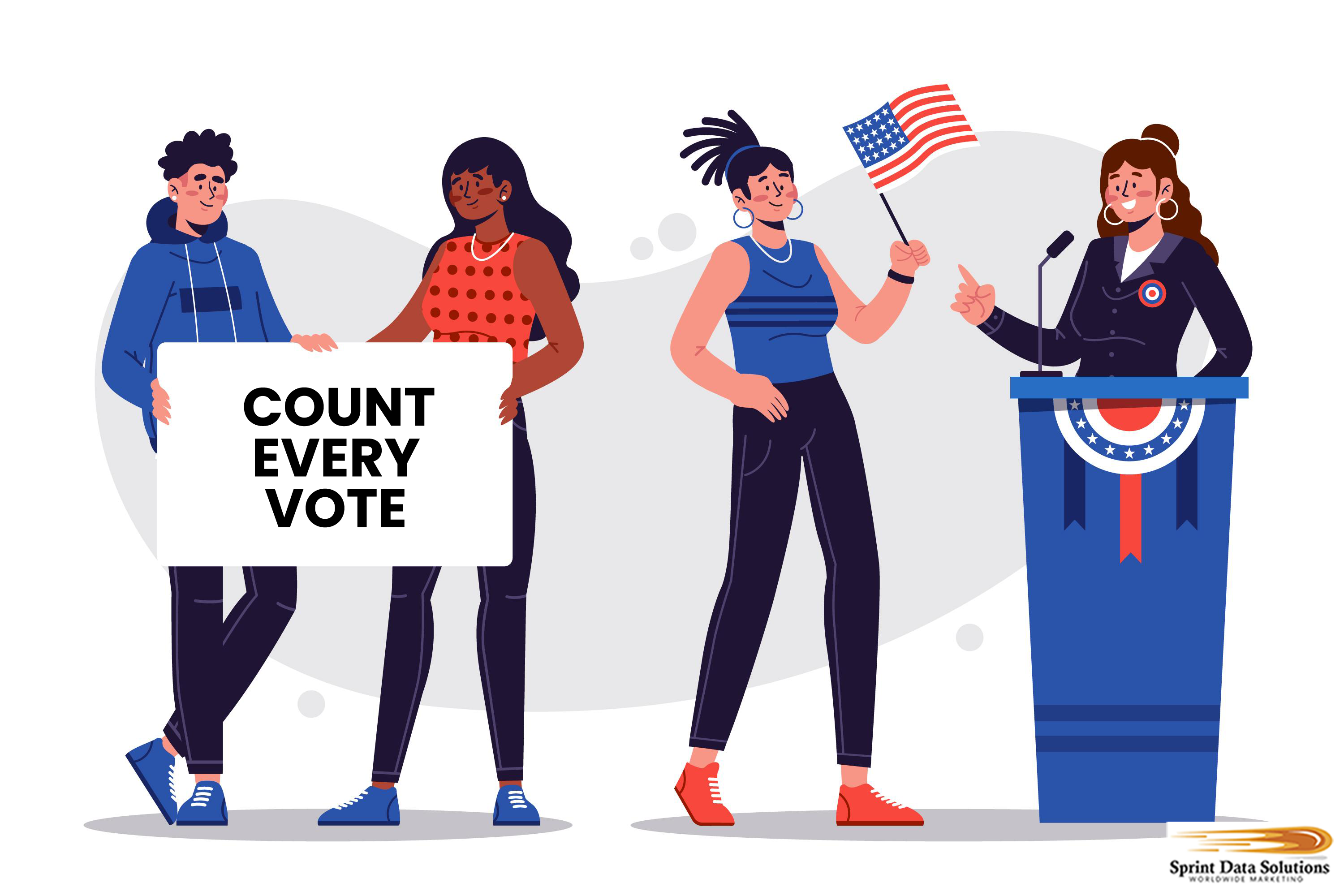
Elections Are Different In The New Millennium
The democratic process, particularly the way candidates engage with voters, has undergone profound transformations over the years, with the advent of the Internet introducing new paradigms and challenging traditional campaigning methods. Despite these changes, the fundamental objectives of campaigning have remained consistent across all levels of elections—local, state, or national.
Candidates are tasked with demonstrating their suitability for office by establishing their legitimacy and credibility. This involves showcasing both their personal integrity and professional qualifications, ensuring voters perceive them as capable and trustworthy individuals who can effectively serve in the desired position. Candidates must articulate their platforms clearly, outlining their stances on key issues and the specific policies they intend to implement if elected.
In addition to presenting their qualifications and policy positions, candidates must effectively communicate their vision for change. This often involves making promises about how they plan to address current challenges and improve conditions within their jurisdiction. The ability to convey a compelling and actionable plan for reform is crucial for gaining voter support.
The rise of digital media has significantly altered how candidates reach and interact with voters. Online platforms have introduced new tools for engagement, such as social media, targeted advertising, and data analytics, which have become integral to modern campaigns. These tools enable candidates to tailor their messages more precisely, reach a broader audience, and engage in real-time interactions with potential voters. However, the core principles of campaigning—building trust, presenting a clear vision, and offering a plan for change—continue to be central to successful electoral strategies.
Over the generations, the methods employed to achieve the core goals of political campaigning have undergone significant evolution, reflecting advances in mass communication technologies and changing voter engagement strategies.
In the pre-mass communication era, campaigns were predominantly localized affairs. Candidates would travel extensively to visit relevant communities, delivering speeches and engaging directly with voters. These personal interactions were crucial for building relationships and gaining support. To supplement these efforts, campaigns utilized print media, including posters and pamphlets, to disseminate information and reinforce their messages.
The advent of radio marked a pivotal shift in campaign strategies. Radio introduced a new dimension to political communication, greatly expanding the reach of candidates’ speeches and interviews. This medium allowed candidates to connect with a broader audience, delivering their messages and engaging with voters across larger geographic areas than previously possible. Radio broadcasts became a staple of political campaigns, offering a new platform for reaching and influencing the electorate.
Television brought another transformative change to the landscape of campaigning. With its emphasis on visual presentation, television enabled candidates to convey their messages through powerful imagery and dynamic advertisements. Political advertisements on broadcast TV became a central element of campaign strategy, providing a way to showcase candidates’ personalities, policies, and platforms in a compelling visual format. Televised speeches, interviews, and debates also became integral components of political campaigns, allowing candidates to present themselves to the public in a more polished and persuasive manner.
Each of these technological advancements—from print and radio to television—has shaped how campaigns are conducted and how candidates interact with voters. While the methods have evolved, the fundamental goals of convincing voters of a candidate’s suitability for office and presenting a clear vision for change remain consistent. The ongoing adaptation to new media and communication technologies continues to influence the strategies and effectiveness of political campaigning.
The advent of the Internet has revolutionized political campaigning, introducing new levels of precision and scope in voter targeting and engagement. Unlike previous communication methods, the Internet allows for the collection and analysis of vast amounts of data, enabling campaigns to create highly detailed and personalized profiles of potential voters. This data includes information from online interactions, such as social media activity, membership in various online groups, and browsing behaviors on websites. These comprehensive profiles offer valuable insights into individuals’ preferences, interests, and behaviors, allowing campaigns to tailor their messaging with unprecedented accuracy.
One of the key transformations brought by the Internet is the shift in how content is distributed and consumed. Traditionally, voters had to tune in to specific radio frequencies or television channels at designated times to access political content, such as speeches, interviews, and advertisements. This method of distribution was constrained by scheduling and accessibility limitations.
In contrast, the Internet has democratized access to information, enabling users to consume content at their convenience, regardless of time or location. With Internet-capable devices like smartphones, tablets, and computers, individuals can access political content—such as videos, articles, and interactive ads—on-demand. This shift has made it easier for campaigns to reach and engage with a diverse audience, leveraging platforms like social media, online video, and targeted email marketing.
The ability to distribute content online also means that campaigns can employ data-driven strategies to optimize their outreach efforts. By analyzing online engagement metrics and user data, campaigns can refine their messaging and targeting strategies in real time, responding to voter feedback and adjusting tactics to maximize impact.
Overall, the Internet has significantly transformed the landscape of political campaigning. It has expanded the reach of political messages, enhanced the precision of voter targeting, and altered the way voters access and interact with campaign content. These changes reflect the broader trend of digital innovation shaping modern communication strategies and political engagement.
Who Benefits
Sprint Data Solutions Worldwide Marketing offers a diverse range of extensive contact lists across various categories, designed to cater to different marketing and outreach needs. These comprehensive lists encompass a wide spectrum of targets, from individual consumers to businesses and organizations, providing detailed contact information and valuable insights. The company’s offerings extend into the political arena as well, where the lists not only represent individual voters but also identify key opportunities for political engagement and action.
Registered Voter Mailing Lists
At the core of American democracy lies the essential role of registered voters, individuals who have made the commitment to actively participate in the electoral process. Voter registration is a foundational step, with requirements varying by state. In some states, individuals must proactively register before they can vote, while others allow for same-day registration at polling places. Additionally, registration requirements may differ regarding political affiliation—some states require voters to declare a party affiliation, such as Republican, Democrat, or Independent, while others do not.
Regardless of political affiliation or state-specific registration rules, the act of registering to vote signifies a commitment to civic engagement. Registered voters have taken the initiative to be part of the democratic process, demonstrating their willingness to contribute to decision-making at local, state, and national levels. This proactive step inherently positions these individuals as more receptive to politically related marketing and outreach efforts.
For marketers and political campaigns, reaching out to registered voters represents a strategic opportunity. These individuals are already engaged in the political system and are therefore more likely to respond to targeted messages and calls to action. Whether through direct mail, digital advertising, or other marketing channels, registered voters are a key audience for campaigns aiming to inform, persuade, and mobilize.
By focusing on registered voters, campaigns and organizations can effectively engage with individuals who have expressed an interest in participating in elections, leveraging their existing commitment to civic involvement to drive impactful political marketing and outreach efforts.
State Voters Mailing Lists
While the presidential election often garners the most attention and media coverage, it is the elections at the state level that frequently have the most immediate and tangible impact on people’s daily lives. State-level elections encompass a range of critical positions, including the governor, state legislators, and other key officials who shape and implement policies affecting various aspects of everyday life.
State elections play a crucial role in determining the direction of local and regional governance. Governors, for instance, hold significant power over state budgets, education policies, and public health initiatives. State legislators, including those in the state Senate and House of Representatives, are responsible for crafting and passing laws that directly influence areas such as transportation, housing, and taxation.
The decisions made by state officials often have a more direct and immediate effect on residents compared to federal policies. For example, changes in state-level education funding, healthcare regulations, or local infrastructure projects can significantly impact communities and individuals.
Given the importance of state-level elections, reaching out to state voters is essential for political campaigns and advocacy efforts. Effective outreach can help inform voters about the stakes of the election, the specific issues at hand, and the potential consequences of electing particular candidates. By clearly communicating how candidates’ positions and policies will affect state-level issues, campaigns can engage voters and mobilize them to participate in the electoral process.
State voters are not only key to shaping policy at the local level but also play a critical role in influencing broader political dynamics. As such, targeted efforts to educate and engage state voters can have a profound impact on the success of campaigns and the direction of state and local governance.
National Voter Mailing Lists
In political marketing, reaching a broad audience is often essential, particularly for high-profile elections like the Presidential race, where engagement spans the entire nation. To effectively connect with the largest number of voters, campaigns may utilize national voter mailing lists. These comprehensive lists are invaluable for addressing large-scale political activities and federal-level issues, ensuring that key messages reach a wide and diverse electorate. Whether aiming to influence national elections or address federal concerns, leveraging these extensive lists helps maximize outreach and impact, making it possible to effectively communicate with a broad swath of voters.

Voter Precinct Mailing Lists
Voting precinct mailing lists are a vital resource for political action, particularly when engaging with voters at the local level where elections are decided. These lists provide detailed information about voters within specific precincts or subdivisions of an electoral district, offering a granular view of voter eligibility and contact details.
In any election, from local to national, understanding and accessing precinct-level data allows campaigns and political organizations to tailor their messaging and outreach efforts with precision. By focusing on specific precincts, campaigns can effectively target voters based on their geographic location, ensuring that political messages resonate with the immediate community and address local concerns.
Precinct mailing lists enable political interests to execute strategic, localized campaigns that engage voters more personally. This targeted approach is crucial for mobilizing voter turnout, disseminating information about polling locations and election dates, and addressing issues pertinent to individual precincts. Whether aiming to influence local races or rally support for broader political initiatives, having detailed access to precinct-level voter data enhances the ability to conduct effective, on-the-ground campaigns and political actions.
Political Donor Mailing List
Beyond fulfilling the fundamental civic duty of electing government officials, many individuals are motivated to contribute financially to political campaigns and causes. Political campaigns often require substantial funding to cover various expenses, including advertising, outreach, and event organization. This is where donations from American citizens become crucial, providing the financial support needed to drive campaign efforts and achieve electoral success.
Donors to political causes come from a diverse range of backgrounds and income levels. For some, contributing to a campaign or cause is a personal commitment to supporting a candidate or initiative they believe in. Lower-income Americans, despite their financial constraints, often allocate a portion of their hard-earned money to support candidates or issues they are passionate about. Similarly, individuals in the middle class frequently contribute to political activities or causes that align with their values and beliefs, helping to fund campaigns that resonate with their political views.
On the other end of the spectrum, affluent donors—often referred to as “big fish”—can make significant financial contributions. These individuals may contribute large sums of money with the expectation of influencing policy decisions or supporting initiatives that reflect their interests. For them, donations are not only a means of supporting a candidate or cause but also a strategic investment in achieving specific policy outcomes or gaining access to political leaders.
Overall, the spectrum of political donations illustrates the broad range of motivations behind financial contributions. From grassroots supporters giving what they can to high-net-worth individuals making substantial investments, each donor plays a role in sustaining and advancing political campaigns and causes. These contributions are vital for ensuring that campaigns have the resources needed to effectively reach voters, communicate their messages, and ultimately succeed in their electoral and advocacy efforts.
Conservative Political Donors
In a political landscape dominated by two major parties, it is natural for donors to align their financial support with the interests and values of their preferred party. For many conservative donors, this alignment is primarily with the Republican Party. These individuals often support causes and policies that reflect their conservative values, which can include opposition to stringent gun control measures, the promotion of Christian values in public life, and the implementation of stricter immigration policies.
Conservative donors are typically motivated by issues that resonate with their ideological beliefs and priorities. For instance, they may support campaigns and organizations advocating for limited government intervention, traditional family values, or enhanced national security. During election cycles and other periods of heightened political activity, conservative donors become an even more critical resource. Their contributions can significantly impact the effectiveness of campaigns that seek to advance conservative agendas or support candidates who champion these values.
Engaging with conservative donors provides a strategic advantage for political activities that align with conservative principles. Their financial support can help fund advertising, outreach efforts, and grassroots initiatives, all of which are essential for mobilizing voters and promoting policy objectives. By understanding the specific causes and issues that resonate with conservative donors, campaigns and organizations can tailor their messaging and outreach strategies to effectively leverage this valuable source of support.
In summary, conservative donors play a crucial role in advancing political activities aligned with conservative values. Their financial contributions are vital for supporting campaigns, influencing policy discussions, and achieving electoral success, particularly during critical political periods such as elections.
Liberal Political Donors
Just as conservative causes align with the Republican Party, many liberal causes find strong support within the Democratic Party. Liberal donors are often deeply invested in advancing progressive policies and social reforms, contributing financial resources to support initiatives that reflect their values. Key issues for many liberal donors include expanding access to abortion services, safeguarding the rights of the LGBT community, and improving the quality of education and social services.
Liberal causes have long been a significant force in American politics, advocating for policies aimed at promoting equality, social justice, and progressive change. Recently, there has been heightened engagement among liberal donors, particularly in response to perceived threats to their priorities. For instance, the overturning of Roe v. Wade has galvanized many liberal activists and donors, intensifying their support for organizations and candidates dedicated to protecting reproductive rights and advancing related causes.
The increased activism and financial support from liberal donors reflect a broader trend of heightened political engagement in response to shifting policy landscapes. Campaigns and political groups that align with liberal values and advocate for progressive change benefit from this active donor base, which is eager to support efforts that address their concerns and advance their goals.
In summary, liberal donors play a crucial role in supporting political causes aligned with progressive values. Their financial contributions are instrumental in funding campaigns, influencing policy debates, and driving social change, especially during periods of significant political activity and challenges to their core issues.
Independent Voter Mailing List
While many Americans align their voter registration with one of the two major political parties, a distinct group of voters chooses a different approach: they vote based on policies rather than party affiliation. These voters, often registered as independents, prioritize specific issues and support candidates or parties whose policies best align with their personal interests and concerns.
Independent voters, though they may be excluded from primary elections for the major parties, represent a significant and influential force in general elections and political donations. Their decisions are driven by policy positions rather than party loyalty, making them a critical demographic for campaigns aiming to address specific issues or advocate for particular reforms.
For candidates and political organizations, engaging independent voters requires a deep understanding of their policy preferences and concerns. Successful outreach involves presenting clear, compelling arguments that align with the issues that matter most to these voters. By focusing on policy-driven messaging and demonstrating a commitment to addressing their priorities, campaigns can effectively connect with this important group.
Independent voters’ influence extends beyond voting; they also play a crucial role in political donations. Their support can be pivotal for campaigns that align with their policy interests, providing essential funding and backing for efforts that resonate with their values.
In summary, independent voters are a vital segment of the electorate, driven by policy rather than party affiliation. Reaching out to them involves understanding and addressing their specific concerns, making them a key audience for targeted political messaging and fundraising efforts.
Undecided Voters Mailing List
An often overlooked yet crucial demographic in elections is the undecided voter. Despite their apparent indecision, these voters can have a significant impact, particularly in tightly contested races where no candidate holds a clear majority. Far from being passive participants, undecided voters are actively engaged in the electoral process, though they have yet to determine their final choice.
Undecided voters represent a unique challenge and opportunity for campaigns. They are open to persuasion and willing to consider various arguments and candidates before making their decision. Engaging this group requires a targeted approach that presents compelling and relevant information, addresses their concerns, and highlights the differences between candidates.
Recent elections have demonstrated that shifting even a small number of undecided votes can be pivotal. In close races, the ability to influence these voters can decisively affect the election’s outcome. As such, campaigns often invest considerable resources in reaching and convincing undecided voters, recognizing their potential to tip the balance in either direction.
To effectively engage undecided voters, campaigns must offer clear, persuasive messaging that resonates with their values and priorities. By providing information on policy positions, candidate qualifications, and the stakes of the election, campaigns can guide undecided voters towards making an informed decision.
In summary, undecided voters play a critical role in elections, often determining the outcome in closely contested races. Far from being inactive, they are engaged participants who require targeted outreach and persuasive arguments to help shape their final voting choice.
Political Activists Mailing Lists
Beyond fulfilling basic civic duties and providing financial support for political activities, the dedication of time and energy by political activists is crucial to the success of political causes and campaigns. Political activists are often driven by a deep passion for their beliefs, going beyond monetary contributions to actively engage in various aspects of political efforts.
Activists play a vital role in shaping political movements and supporting campaigns. Their involvement can take many forms, from grassroots efforts such as canvassing neighborhoods, organizing events, and managing campaign operations, to more high-profile actions like participating in demonstrations, protests, or advocacy events. Their commitment to their causes is evident through their willingness to invest substantial time and effort, often working tirelessly to mobilize others and drive change.
During election periods, the energy and enthusiasm of political activists can significantly amplify a campaign’s reach and impact. They are instrumental in rallying support, spreading messages, and engaging with voters on a personal level. Activists often serve as the backbone of campaign operations, providing essential support that complements financial contributions and enhances the overall effectiveness of political outreach.
Moreover, activists’ involvement extends beyond elections. Their dedication can help sustain momentum for political causes, influence policy discussions, and drive long-term change. By actively participating in advocacy and mobilization efforts, political activists contribute to a dynamic and responsive political landscape.
In summary, political activists are a valuable resource, bringing more than just financial support to the table. Their commitment of time and energy plays a crucial role in advancing political causes, supporting campaigns, and driving meaningful change. Their active participation is essential for fostering engagement, mobilizing voters, and achieving political goals.
Swing State Voters
At the federal level, one of the most pivotal demographics in determining the outcome of Presidential elections are “swing state voters.” Unlike states such as California, which consistently lean Democratic, or Texas, which reliably supports Republican candidates, swing states are characterized by their unpredictability and potential to swing either way in any given election. These states can be decisive in tipping the balance of an election due to their fluctuating voter preferences.
Swing states, often referred to as battleground states, are crucial because they lack a clear partisan majority, making them highly competitive. As a result, they receive intense focus from candidates and campaigns. Significant time, resources, and strategic efforts are dedicated to winning over voters in these states. Campaigns frequently tailor their messaging, advertising, and outreach strategies specifically for the diverse and dynamic electorate found in swing states.
To effectively engage swing state voters, it is essential to have robust and detailed databases that provide comprehensive information about the electorate in these areas. This includes understanding voter demographics, preferences, and past voting behaviors. With accurate and up-to-date data, campaigns can execute targeted outreach, personalize their messaging, and address the specific concerns and issues that resonate with voters in these critical states.
Given their importance in shaping the outcome of federal elections, swing states often become the focal point of campaign activities. Effective targeting and strategic planning in these areas are vital for maximizing impact and securing the necessary support to win the Presidency.
In summary, swing state voters represent a crucial demographic in Presidential elections, making it essential for campaigns to have well-developed databases and targeted strategies for these areas. The ability to effectively engage and persuade voters in swing states can be the key to securing a victory in the highly competitive arena of federal-level politics.
A New Election Is Coming
While the next presidential election in the United States is scheduled for November 2024, the groundwork for a successful campaign begins long before that date. In fact, experienced political organizations understand that early preparation is crucial for achieving electoral success. Strategic planning, organization, and the development of effective outreach tactics are essential for positioning a campaign to effectively engage voters and secure support when the election season arrives.
Starting the preparation process well in advance allows campaigns to build a comprehensive strategy, refine their messaging, and establish connections with key voter demographics. Early efforts include gathering and analyzing voter data, developing targeted communication plans, and setting up efficient systems for outreach and engagement. This proactive approach ensures that campaigns are well-equipped to respond swiftly and decisively to the evolving political landscape as Election Day approaches.
Sprint Data Solutions Worldwide Marketing can play a pivotal role in this preparatory phase by providing a competitive advantage through its extensive multichannel voter contact lists. With access to detailed voter databases for every district in the USA, campaigns can leverage this information to craft personalized and targeted strategies that resonate with specific voter segments. Whether through direct mail, phone calls, or digital channels, having accurate and comprehensive voter contact information allows campaigns to effectively reach and engage with their target audience.
By utilizing Sprint Data Solutions Worldwide Marketing’s resources, political organizations can gain valuable insights into voter preferences, behavior, and demographics. This data-driven approach enhances the ability to tailor messaging, optimize campaign efforts, and maximize voter outreach. As a result, campaigns are better positioned to build support, mobilize voters, and ultimately achieve their electoral goals.
In summary, the key to political victory lies in early and strategic preparation. Sprint Data Solutions Worldwide Marketing offers a valuable edge by providing detailed voter contact lists and multichannel outreach solutions, ensuring that campaigns are ready to act effectively and decisively as they work towards winning the presidential election.
Reach The Groups You Need
Sprint Data Solutions Worldwide Marketing provides a comprehensive array of voter and political contacts, offering more than just basic contact details. The data includes valuable demographic information, meticulously gathered through various methods such as surveys, purchase actions, and mailing lists. This extensive dataset is crucial for political campaigns and organizations seeking to enhance their outreach efforts and effectively target specific voter segments.
The data collected by Sprint Data Solutions Worldwide Marketing is meticulously organized and categorized, allowing for sophisticated cross-referencing through advanced big data analytics. This enables campaigns to segment and analyze voter information with precision, tailoring their strategies to meet the unique needs of different voter groups. By leveraging these insights, candidates and political organizations can optimize their outreach efforts and focus on the demographics most likely to impact their success.
With the power of big data analytics, candidates can access detailed voter profiles segmented into various categories, such as:
- Ethnicity
- Age
- Children’s Age
- Debt
- Homeowner
- Renter
- Marital Status
- Income
- Veteran Status
- Geography
- Mortgage Data
And more.
At Sprint Data Solutions Worldwide Marketing, we understand that effective voter outreach goes beyond traditional mailing addresses. Our comprehensive voter lists are available across multiple contact methods, ensuring you can reach your audience through mail, email, text/SMS messaging, and telephone. Whether you need to connect with voters, activists, or donors, we offer targeted solutions tailored to your specific needs.
Our extensive database allows you to access detailed and segmented voter information, making it possible to engage with key demographics for various purposes, including elections, volunteer recruitment, and fundraising. By utilizing our advanced data solutions, you can enhance your campaign’s outreach efforts and increase your chances of success.
Choose Sprint Data Solutions Worldwide Marketing for precise and effective voter contact lists. With our expertise and resources, we can help you target the right individuals and maximize your impact in every aspect of your political strategy. Partner with us to gain a competitive edge and achieve your electoral goals with confidence.